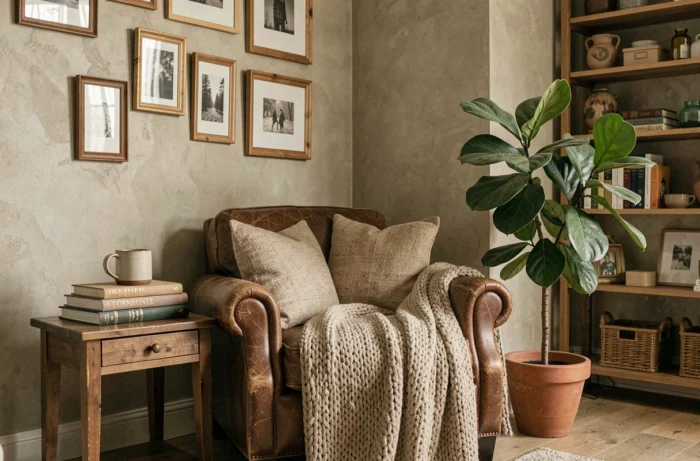
The transformation of an interior does not begin with the choice of a cushion or a wall color. It starts with the building envelope, the air quality, and the thermal properties of the walls. Transforming your home into a unique and warm space requires addressing real comfort before moving on to decoration.
Thermal comfort and cold walls: the prerequisite for any interior layout
A room with walls that radiate cold in winter or accumulate heat in summer will never be perceived as warm, regardless of the furniture. The surface temperature of the walls conditions the sensation of comfort much more than the ambient air temperature. We regularly observe that interiors that are highly decorated remain uncomfortable due to untreated heat losses.
Recent data confirms this reality: overheating in homes is directly associated by occupants with poor insulation (29%) and insufficient ventilation (15%). Before choosing a textile or a light fixture, we recommend a diagnosis of the walls, openings, and air renewal. Addressing thermal bridges at window frames or floor-wall connections radically changes the perception of a living room or bedroom.
In 2024, 246,000 MaPrimeRénov’ files for renovation gestures were settled, generating estimated savings of 1.4 TWh per year. These interventions, often perceived as purely technical, eliminate unwanted drafts, remove cold walls, and reduce temperature differences between rooms. The effect on daily comfort is immediate: one can then truly utilize the resources of decoration to personalize a space that offers welcoming comfort all year round.

Color palette and materials: how to choose colors that structure the space
The choice of colors deserves more than just a simple alignment with current trends. The work on the color palette should start from the volume of the room, its orientation, and the nature of the natural light received. A north-facing room with little direct sunlight struggles with cold shades, even trendy ones. Several online resources allow for deeper exploration of these topics; detailed approaches that intersect decorative style and technical constraints of housing can be found on maisonmania.fr.
We recommend limiting the palette to three shades maximum per room: a dominant (walls and large areas), a secondary (main furniture or textile), and an accent (objects, cushions, light fixtures). This trio rule avoids visual dispersion and creates coherence between rooms by allowing the secondary shade to flow from one space to another.
Matte, satin, or textured finishes
The finish of the wall covering alters the perception of color as much as the shade itself. A matte finish absorbs light and reduces reflections, which is suitable for very bright living spaces. Conversely, a satin finish in a narrow hallway reflects light and visually expands the volume.
Raw materials (lime, clay, troweled plaster) provide a surface depth that standard acrylic paint does not replicate. They also contribute to the hygrometric regulation of the room, which directly relates to the thermal comfort mentioned earlier.
Architectural lighting: layering sources rather than multiplying points
The majority of interiors suffer from mono-source lighting, often a central ceiling fixture that flattens volumes and creates unwelcoming shadow areas. The professional approach relies on three layers of overlapping lighting:
- General lighting (preferably indirect) that bathes the room without glare, via luminous cornices, diffusing pendants, or uplights directed towards the ceiling.
- Functional lighting, focused on activity areas: kitchen worktop, reading nook in the living room, office. The color temperature should remain neutral to cool (4,000 K) for these specific uses.
- Ambient lighting, with table lamps, candles, or variable intensity LED strips, below 2,700 K to create the visual warmth sought in the evening.
Layering these three layers gives total control over the atmosphere of a room at any time of the day. A dimmer on each circuit is the best low-cost decorative investment.
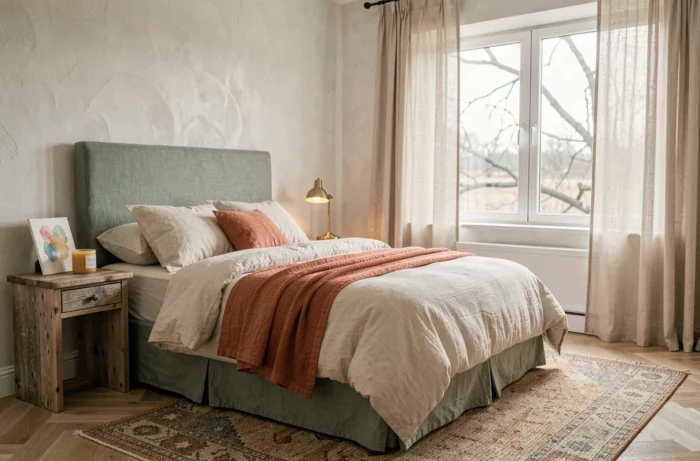
Textiles and furniture: creating uniqueness without overloading
The temptation to accumulate is the most common trap when trying to make a space unique. The result is often visual clutter that produces the opposite effect: a tiring interior that is difficult to maintain and ages poorly.
Prioritizing textiles by function
Each added textile must meet a specific need. A rug in the living room isolates from the floor and defines the conversation area. A thick linen curtain softens the acoustics of a room with hard surfaces. Cushions of varying densities on a sofa correct the seating. We discourage purely decorative textiles that serve no functional purpose: they always end up cluttering.
Antique furniture and reclaimed pieces
Mixing one or two antique pieces with contemporary furniture is enough to give an interior a unique character. A vintage dresser, a flea market mirror with its patinated frame, or a solid wood farmhouse table create a temporal contrast that entirely new interiors lack. The asymmetry between eras and materials adds character without resorting to additional decorative objects.
The choice of furniture also benefits from considering the issue of French manufacturing. Artisan skills, whether in upholstery, cabinetmaking, or metalwork, produce pieces whose patina and imperfections contribute to that unique atmosphere that industrial furniture cannot replicate.
A warm space is therefore built in successive layers: first the structure and thermal comfort, then the light, followed by color, and finally furniture and textiles. Each layer depends on the previous one. Jumping directly to accessories without addressing the fundamentals results in a decor that looks pleasant in photos but is uncomfortable to live in. The order of interventions matters as much as their quality.