Classic decor guides pile on advice about wall colors and sofa placement. Here, we focus on the technical levers that truly transform a trendy interior: bio-sourced materials, management of artificial light by color temperature, and furniture proportions suited to the actual volumes of the room.
Bio-sourced materials and vibrant finishes: the true marker of a trendy home
Wood, linen, and rattan are classics. The shift that has occurred over the past two years involves materials from another realm: mushroom leather, bioplastics, and compostable composites. These materials, durable and water-resistant, are now used to dress seating, wall coverings, and decorative accessories.
Their appeal goes beyond ecological dimensions. The organic textures they produce, with irregular patinas and muted colors, create a visual signature that is impossible to replicate with industrial synthetics. A chair made of mushroom leather looks unlike any other chair.
We recommend introducing them in small touches rather than in a total look. A coffee table top made of tinted bioplastic, a set of cushions in bio-sourced material, or a composite light fixture is enough to anchor the space in a contemporary aesthetic without overdoing it. Several resources allow for deeper exploration of these topics, including Media Gaga’s home section, which regularly discusses new materials applied to interior decoration.
Color temperature and lighting: the variable that interior decoration neglects
Changing a light fixture to a more stylish model is not enough. The color temperature of the bulb conditions the entire perception of a room, much more than the shape of the lampshade.
A living room equipped with warm temperature bulbs (around 2,700 kelvins) will appear enveloping and cozy. The same room, with bulbs at 4,000 kelvins, will seem cold and clinical, regardless of the furniture installed.
Adjusting temperature by living area
We observe a simple principle that works in most configurations:
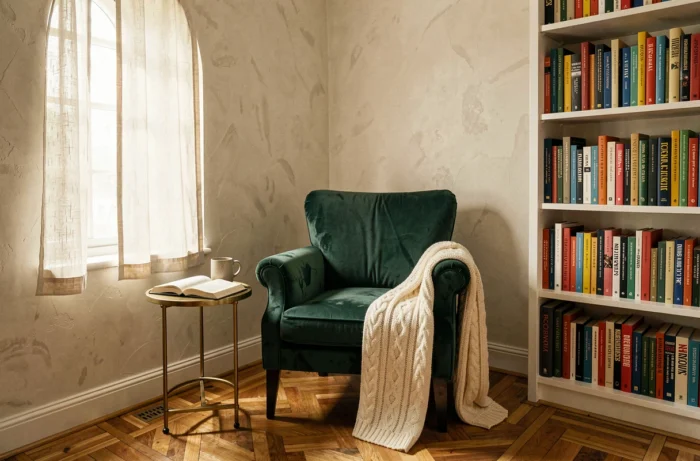
- Rest areas (bedroom, reading nook, TV lounge): warm temperature, between 2,200 and 2,700 kelvins, to promote relaxation
- Work zones (office, kitchen countertop): neutral temperature, around 3,500 to 4,000 kelvins, which maintains concentration without straining the eyes
- Bathroom: neutral to cool temperature in the morning (tonic light), with the option of a dimmer to switch to warm light in the evening
LED strips with variable temperature (tunable white) allow for adjustments according to the time of day. This is a modest investment that radically transforms the ambiance of a space without touching the furniture or walls.
Furniture proportions and room volume: avoiding the catalog effect
An oversized piece of furniture overwhelms a room, while a piece that is too small makes it feel inconsistent. This principle seems obvious, but most interior decoration mistakes stem from a mismatch between the dimensions of the furniture and the actual volume of the space.
The classic trap: reproducing an ambiance seen in a magazine or on Pinterest without considering proportions. A spectacular sectional sofa in a 35 m² living room becomes an obstacle in an 18 m² living room.
The rule of thirds applied to furniture
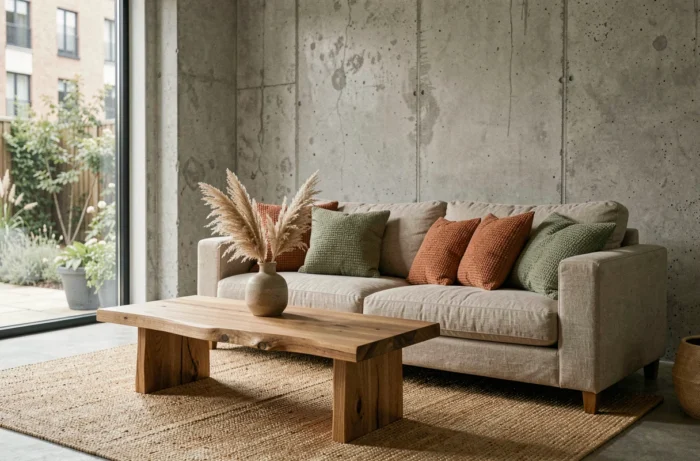
In decoration as in photography, the rule of thirds structures the space in a balanced way. A sofa should not occupy more than one-third of the length of the main wall. The coffee table should represent about two-thirds of the length of the seating.
For small spaces, we recommend favoring furniture with visible legs rather than blocks placed on the floor. Simply clearing the floor under a TV unit or sideboard gives an impression of lightness and visually enlarges the room.
Customization through digital tools: accessible custom projects
AI-assisted visualization platforms are changing the way we conceive a decor project. Tools now allow for simulating a complete layout from a photo of the existing room, testing combinations of colors, materials, and furniture.
The main advantage lies in reducing purchasing errors. Visualizing a wall covering in a real situation, with the natural light of the room and the furniture already in place, avoids returns and disappointments.
This convergence of design and technology makes custom solutions accessible without going through an interior designer for every decision. A bio-sourced wood panel virtually tested on the living room wall, an upholstery fabric simulated on the existing sofa: these visual validation steps, once reserved for professionals, are now within reach.
Hybrid styles: why controlled mixing replaces the total look
The total Scandinavian or industrial look is over. The trendy interiors of 2026 embrace mixes: a japandi base (clean lines, neutral tones) enriched with vintage finds, a contemporary living room punctuated by an art deco light fixture, a minimalist bedroom warmed by a Berber rug.
The key to a successful mix lies in a common thread. This can be a limited color palette (three shades maximum), a dominant material (light wood, brushed metal), or a consistent furniture height. Without this thread, the mix turns into a hodgepodge.
- Choose a dominant style that occupies about two-thirds of the space
- Introduce a secondary style through strong but few pieces (a chair, a light fixture, a mirror)
- Keep a unifying element visible in every area of the room: the same type of wood, the same metal finish, the same color family
The hybrid style requires more thought than a total look, but it produces interiors with real personality, impossible to replicate exactly next door.
Enhancing an interior does not require an oversized budget or the mechanical application of trends. Technical choices (lighting temperature, proportions, bio-sourced materials) weigh more than superficial aesthetic choices. A well-proportioned space, properly lit, and built around coherent materials will remain elegant well beyond seasonal trends.