Home DIY relies on precise technical gestures: connecting a hose, installing a silicone seal, replacing a switch. Learning these gestures alone, through trial and error, exposes one to costly and sometimes dangerous mistakes. Practical DIY training promises to structure this learning to make each occupant more autonomous at home. The regulatory framework surrounding these trainings has changed recently, affecting their accessibility and funding.
Funding for DIY training: what the CPF no longer covers
Since 2024, non-certifying DIY training is no longer eligible for funding through the Personal Training Account. In practice, most workshops aimed at home autonomy (tiling, minor plumbing, painting) are not registered with the RNCP or the Specific Directory. They now rely on personal funding.
Some training programs have obtained registration in the Specific Directory and validate targeted skill blocks: basic domestic electricity, light carpentry, minor plumbing. These certifications do not allow one to work as a professional craftsman. The boundary between domestic autonomy and professional qualification is delineated by France compétences.
For home workshops, another option exists. When they fall under “minor DIY, handyman” within the framework of personal services, they may qualify for a tax credit. The personal services market reached 22.8 billion euros in revenue in 2024, reflecting the size of this sector. Checking the legal status of the organization before registering allows one to know if this tax advantage applies.
Taking a practical training on bricoludik.fr is a starting point to identify programs suited to a specific domestic project, outside the CPF circuit.
DIY certification and legal limits: where domestic autonomy ends
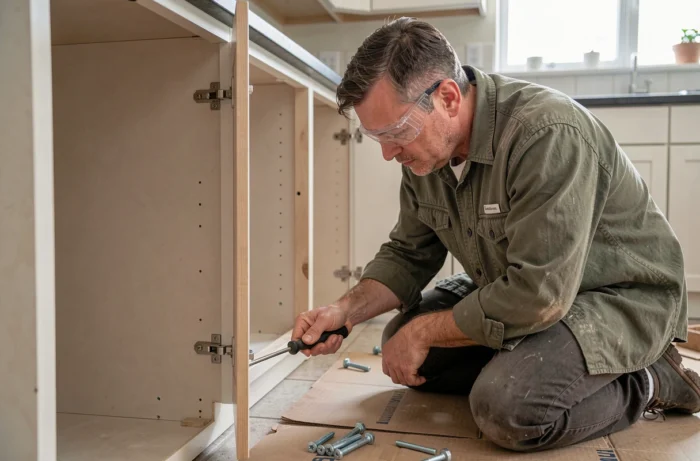
A validated skill block in minor plumbing allows one to change a siphon or a faucet at home. It does not permit intervention on a collective water network or signing a compliance certificate. The same logic applies to electricity: replacing a socket or a switch falls under domestic autonomy, but working on the electrical panel or the main connection remains reserved for a qualified professional.
No leisure training replaces regulatory authorization. Work subject to safety standards (NF C 15-100 for electricity, DTU for plumbing) requires the intervention of a certified craftsman as soon as it concerns the structure or main networks of the dwelling.
This limit is not a hindrance. It defines a clear scope: DIY training covers routine maintenance tasks and minor modifications. Knowing exactly where this scope ends prevents one from finding themselves in violation or, more seriously, facing an uninsured disaster.
Concrete skills targeted by home DIY training
Field feedback varies on this point: not all programs cover the same gestures. Available data allows for the identification of a common foundation for training focused on domestic autonomy.
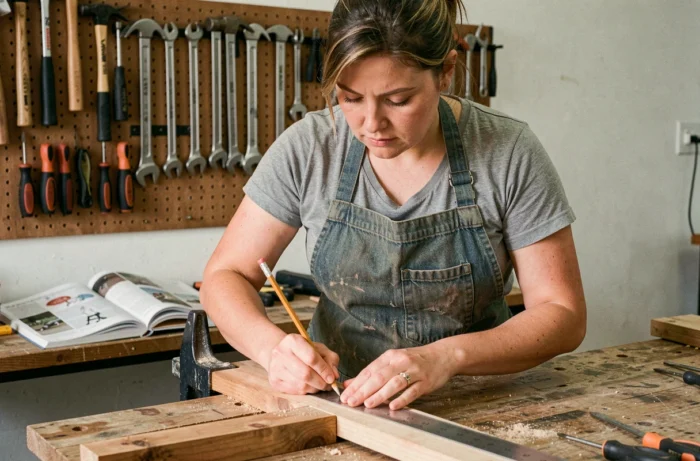
- Light carpentry: assembling a shelf, adjusting a door, installing baseboards. These gestures require mastering measurement, straight cutting, and screwing into different materials (solid wood, particleboard, drywall).
- Basic plumbing: replacing a seal, installing a mixer tap, connecting a washing machine. The difficulty lies in choosing the correct diameter of the fitting and ensuring the tightness of the threads.
- Simple domestic electricity: changing a switch, installing a light fixture, adding a socket in parallel on an existing circuit. The training teaches how to cut power, identify phases, and check with a tester.
- Finishes: installing floating flooring, painting a wall with a clean finish, applying a filler. These techniques may seem simple but require thorough surface preparation for a durable result.
Preparation often represents more than half of the working time. Sanding, cleaning, protecting adjacent areas: these steps, often overlooked by beginners, condition the quality of the final result. A structured training emphasizes preparation as much as the technical gesture itself.
Choosing a DIY training: verifiable selection criteria
The number of programs available online makes sorting difficult. A few factual criteria can help filter before committing.
The first concerns the Qualiopi certification of the organization. A new reference framework is coming into effect, which strengthens the requirements for the traceability of the skills transmitted. A Qualiopi certified organization guarantees an audited educational process, not necessarily the quality of the individual trainer, but a verifiable framework.
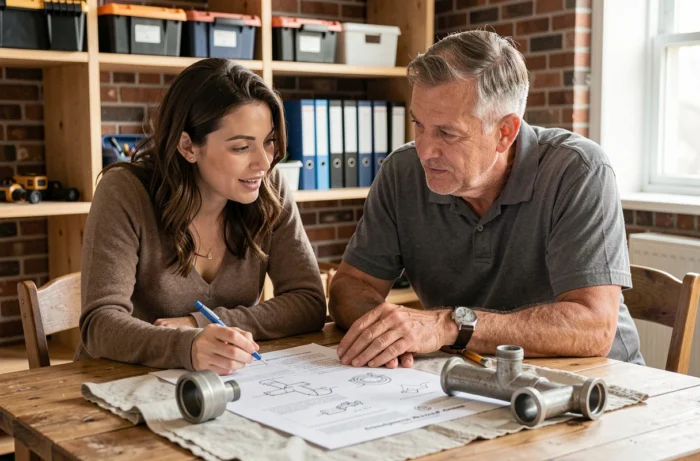
The second criterion relates to the format. In-home face-to-face courses allow one to work on their own project, with their own constraints (age of the building, materials in place, available tools). Group workshops in a equipped workshop provide access to professional tools and varied practical situations. The two approaches do not meet the same need.
- For a specific and immediate project (renovating a bathroom, redoing a floor), in-home coaching is more suitable.
- To acquire a broad base of skills, collective workshops cover more techniques in less time.
- YouTube tutorials complement these trainings but do not replace real-time correction from a trainer who observes your gestures.
The third criterion is the content of the program. A good program details the gestures taught, not just the topics covered. “Introduction to plumbing” says nothing. “Replacing a thermostatic faucet and installing a supply hose” lets one know what they will actually learn.
Home autonomy is not decreed in a single workshop. It is built project by project, accumulating mastered gestures in real situations. Choosing a training suited to one’s level and project remains the determining variable for progressing without breaking anything, without risk, and without having to call a professional to correct an avoidable mistake.