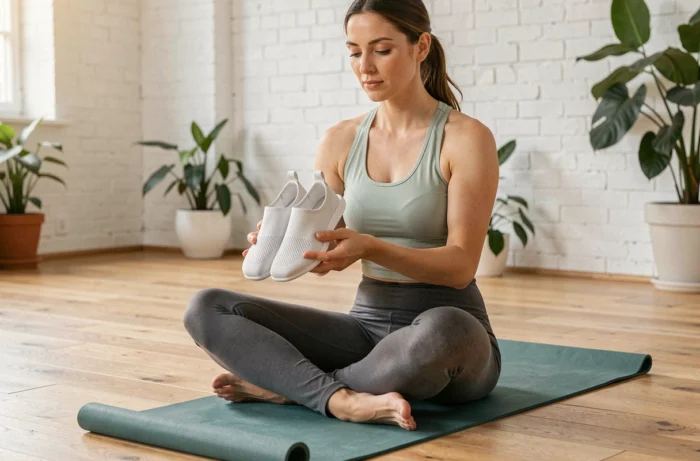
Sliding on a mat during a balance pose, feeling the cold floor of a shared studio under the soles of your feet, losing stability in a quick sequence: these situations naturally direct the reflection towards what you wear on your feet during a yoga session. The choice of shoes for yoga – or the absence of shoes – directly influences the quality of the poses and the comfort experienced.
Proprioception and Ground Contact: What Your Feet Perceive During Poses
Have you ever noticed that holding a pose with your eyes closed becomes much more difficult? This is because balance relies heavily on the information that the sole of the foot sends to the brain. This mechanism is called proprioception.
In yoga, each pose engages specific areas under the foot. A Warrior II activates the inner arch of the front foot, while a Tree pose concentrates pressure on the arch of the supporting foot. The more direct the contact with the ground, the more precise these signals are.
This is why practicing barefoot remains the standard in most classes. No sole, even a thin one, transmits as much tactile information as bare skin. To delve deeper into this point and discover additional selection criteria, the dedicated Sportivoz yoga page details the technical characteristics to observe.
Barefoot offers the best proprioception possible on a mat. Any added protection reduces this sensory feedback. The choice then boils down to evaluating what you gain in comfort or hygiene against what you lose in sensations.
Non-Slip Yoga Socks: Grip, Hygiene, and Limitations
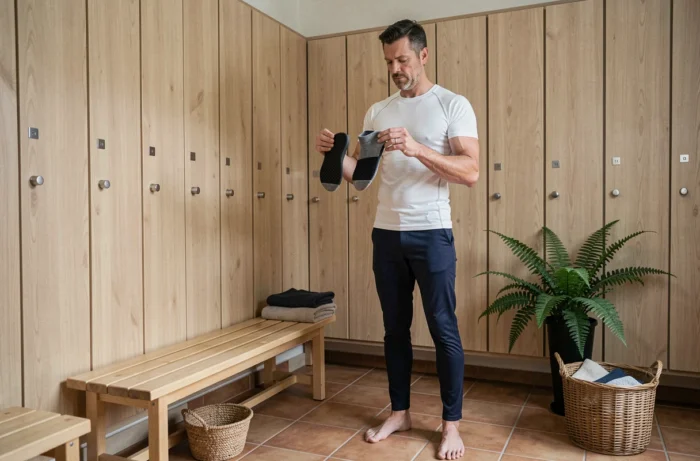
Non-slip yoga socks have emerged as the most common compromise between going barefoot and wearing shoes. Their popularity has significantly increased in recent years, driven by a growing concern for hygiene in studios where mats and floors are shared.
How to Recognize an Effective Yoga Sock
Not all socks sold as “non-slip” are created equal. The most effective recent models are distinguished by soft grips distributed across the entire sole, rather than just a few areas.
- A full coverage of grips under the foot ensures uniform grip during transitions between poses, whereas a partial pattern leaves areas prone to slipping
- Models with separated toes allow for natural toe splay, which promotes balance in standing poses
- A breathable and snug fabric prevents the sock from twisting on the foot during dynamic movements
Socks with full grips are a great substitute for bare feet in a shared studio. They provide a hygienic barrier without sacrificing too much sensory feedback, as long as you choose a thin and well-fitted model.
When the Sock is Not Enough
On a hard floor (wood, concrete, tile) without a mat, a thin sock provides no cushioning. Kneeling poses or prolonged pressure on the forefoot become uncomfortable. In this case, a more structured protection is justified.
Minimalist Shoes for Yoga: A Suitable Choice for Cold and Hard Floors
The term “yoga shoe” is misleading. These are not running or fitness shoes. A shoe suitable for yoga has a zero or nearly zero drop, meaning that the heel and the front of the foot are at the same height. This criterion is fundamental: a high drop shifts the center of gravity forward and destabilizes the poses.
Why this choice rather than a classic sports shoe? Because the thick sole of a running model absorbs information from the ground. It isolates the foot instead of connecting it. In yoga, you need the opposite.
Selection Criteria for a Minimalist Yoga Shoe
- A zero drop to maintain the natural alignment of the pelvis and spine during poses
- A flexible sole that bends easily in hand, indicating it won’t hinder foot movements
- A wide toe box to allow for toe splay, similar to what you would do barefoot
- A minimal weight to avoid weighing down transitions or hindering inverted poses
The flexible sole and zero drop are the two non-negotiable criteria. The rest (materials, aesthetics, brand) is a matter of personal preference.
Adapting Your Footwear to the Type of Yoga Practiced
Yoga encompasses very different practices. What works in gentle Hatha may not be suitable in Ashtanga or Power Yoga.
In gentle or restorative yoga, movements are slow and poses are held for a long time. Barefoot on a mat remains the most logical choice. Maximum proprioception helps finely adjust each support. If the floor is cold, a pair of thin grip socks is sufficient.
In dynamic yoga (Vinyasa, Ashtanga, Power Yoga), quick sequences multiply the risks of slipping. Ground adherence becomes a priority over thermal comfort. Full grip socks offer a real advantage here compared to bare feet, especially when sweat makes the mat slippery.
In Hot Yoga, heat and humidity completely change the game. Bare feet sweat profusely, which reduces grip on the mat. Absorbent socks with grip remain the most functional solution in this environment.
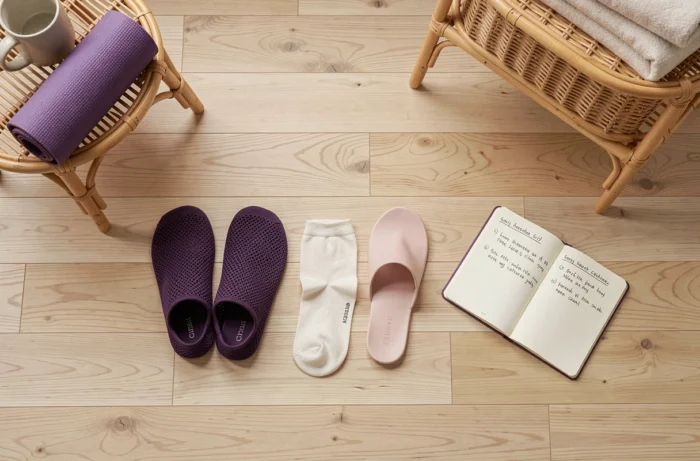
The choice also depends on the location. Practicing at home on a personal mat raises fewer hygiene concerns than a class in a studio with shared equipment. At home, barefoot. In a shared studio, non-slip socks. On a hard floor without a mat, minimalist shoes with a zero drop.
Footwear in yoga is not a trivial detail. It conditions stability, comfort, and the accuracy of poses. Starting from the type of practice and training location to find the right model avoids unnecessary purchases and unpleasant surprises during a session.