
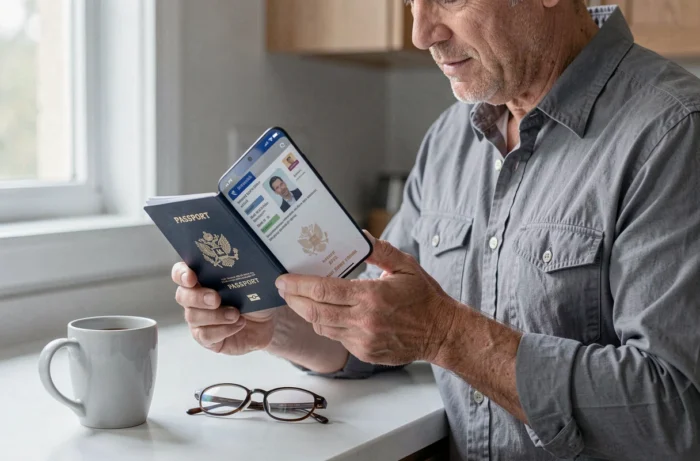
An electronic visa is a travel authorization issued digitally, electronically linked to the applicant’s passport, without a physical document to stick or stamp. This online travel authorization is gradually replacing traditional consular procedures in an increasing number of countries, from tourism to short business stays.
EES, ETIAS, ETA: three systems not to be confused
The landscape of electronic travel authorizations has become more complex in recent years. Three acronyms keep coming up, and confusing them can cost you boarding.
The Entry/Exit System (EES) of the European Union became fully operational on April 10, 2026, after a deployment phase that began on October 12, 2025. This system systematically records biometric data (face, fingerprints) and each entry or exit of non-EU travelers at the external Schengen border. The manual stamp on the passport is replaced by a digital record.
The ETIAS (European Travel Information and Authorisation System) concerns nationals of countries exempt from Schengen visas. It is a prior travel authorization, comparable to the American ESTA system. Its implementation has been postponed several times.
The UK ETA (Electronic Travel Authorisation) now covers all nationalities not subject to a visa for the UK, including EU citizens. These three systems coexist without replacing each other: a traveler may need one, the other, or several depending on their itinerary.
To better understand the specific procedures for each type of e-visa and prepare an error-free application, it is useful to consult the 123 Voyages website, which details the procedures by destination.
Electronic visa: documents and eligibility conditions by destination
Eligibility for an e-visa depends on three main variables: the nationality of the applicant, the type of passport held, and the purpose of the stay. The same country may offer a tourist e-visa while requiring a traditional consular procedure for a work visa.
The documentary requirements remain relatively stable from one country to another:
- A valid passport with an expiration date that exceeds that of the planned stay, often by several months according to local requirements
- A biometric ID photo (digital format, white background, without glasses in most cases)
- A functional email address, as the authorization is sent by email or accessible via an online account
- An electronic payment method to pay the processing fees online
Some countries add specific documents: proof of accommodation, return ticket, proof of financial resources. Egypt, for example, has initiated a massive expansion of its e-visa system so that all airports in the country are fully ready by 2026 to process tourist entries electronically.
Each country sets its own eligibility criteria, and these are regularly updated. Checking the conditions on the official website of the destination country remains the only reliable method before filling out a form.
Filling out an e-visa application without input errors
The majority of refusals or processing delays stem from errors in the application form. A typo in the passport number, a mix-up between the birth name and the name used, or an incorrectly reported validity date is enough to block the application.
Precautions before submitting the form
Copying the information directly from the passport identity page eliminates most errors. The name entered must match exactly with that printed in the passport, character by character, including hyphens or particles.
Official platforms generally display a summary before validation. Reviewing this summary line by line, comparing it with the physical document, takes less than a minute and can prevent several weeks of additional delay in case of rejection.
Official platforms and private intermediaries
E-visa applications go through either the government portal of the concerned country or through accredited or non-accredited intermediary platforms. Only official sites guarantee direct processing by the administration of the destination country. Intermediaries add service fees, sometimes for useful assistance (file verification, help in case of problems), sometimes without real added value.

Biometric control at borders: what changes concretely for the traveler
The introduction of the EES in the Schengen area modifies the experience of crossing the border. Instead of presenting their passport for a stamp, non-EU travelers pass in front of a biometric capture device (facial recognition, fingerprints).
This system automatically calculates the remaining authorized duration of stay. For travelers subject to the 90 days in 180 days rule in the Schengen area, the counting is now managed digitally, without ambiguity. Overstays become detectable at each exit point.
For holders of an e-visa or an ETIAS authorization, the biometric control is in addition to the prior electronic authorization. The two systems work in complement: one checks the right of entry before the trip, the other records the actual passage at the border.
Travelers transiting through multiple Schengen entry points should check, country by country, if the system is active at the time of their passage, as these systems remain in adjustment phase.
The underlying trend remains the same across all geographic areas: the paper visa gives way to the electronic authorization linked to the biometric passport. Keeping your passport up to date, checking the e-visa eligibility of each destination, and submitting your application well in advance of departure are the three reflexes that prevent most unpleasant surprises at the airport.